
Introduction
Commercial buildings require highly efficient power distribution within strictly limited spaces. A reliable wall mounted electrical panel acts as the crucial nerve center for lighting, HVAC, and office equipment.
Specifying the wrong equipment leads to severe overheating, code violations, and costly facility shutdowns. It can also create massive headaches during future building expansions or tenant upgrades.
This comprehensive buyer's guide helps contractors and facility managers navigate the technical complexities. We will break down exactly how to match your building's single-line diagram with the perfect power solution.
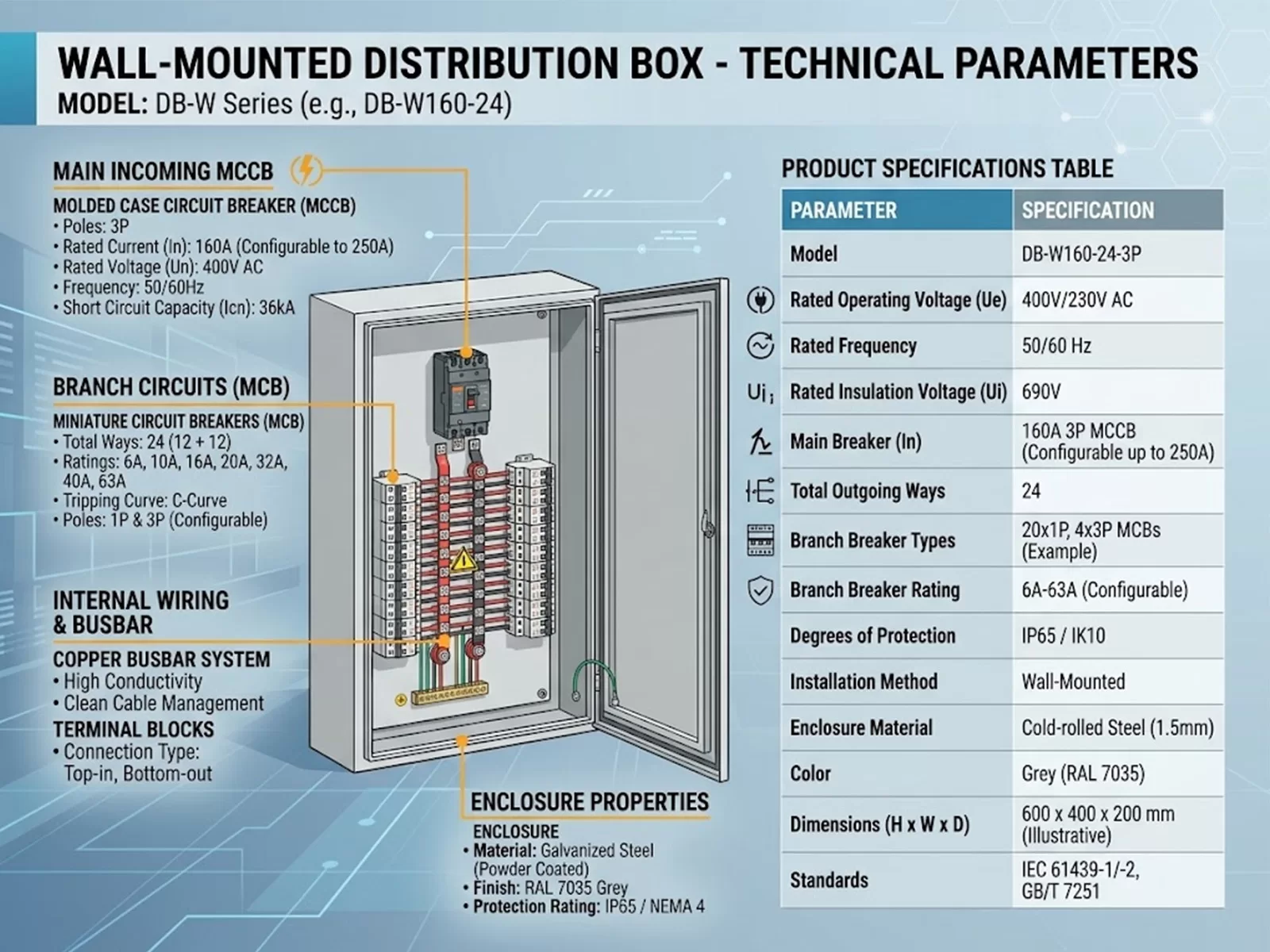
Key Factors to Consider When Selecting a Low Voltage Wall Cabinet
Choosing the right equipment goes far beyond just checking the amperage rating. You must evaluate spatial constraints, aesthetic requirements, and long-term electrical safety.

1. Electrical Capacity and Breaker Configuration
Your commercial main breaker panel must handle the building's peak continuous load while leaving room for future additions. Proper copper busbar sizing is strictly mandatory to prevent internal heat accumulation.
● Amperage Rating: Ensure the main busbar matches the maximum incoming utility current.
● Short Circuit Rating (kA): The panel must safely withstand the maximum fault current available from the grid.
● Branch Circuit Space: Always specify at least 20% extra blank breaker slots for future tenant expansions.
2. Installation Types: Surface vs. Flush Mount
Commercial aesthetics often dictate how the panel should be installed in public or office corridors. The choice affects both the installation time and the final visual impact.
● Surface Mount Distribution Board: Bolts directly onto the wall, making it ideal for utility rooms and concrete basements.
● Flush Mount Electrical Panel: Recesses directly into drywall, offering a clean, unobtrusive look for high-end office spaces.
● Retrofit Compatibility: Ensure the selected mounting style aligns with existing conduit routing during building renovations.
Application Scenario vs. Recommended Specifications Matrix
| Commercial Space Type | Recommended Mounting Style | Recommended IP Rating | Key Feature Requirement |
| High-End Office Corridors | Flush Mount | IP40 (Indoor) | Aesthetically pleasing flat door trim, hidden hinges. |
| Basement Utility Rooms | Surface Mount | IP54 (Dust/Splash Proof) | Heavy-duty steel construction, padlock provisions. |
| Commercial Kitchens | Surface Mount | IP65 (Washdown Ready) | 304 Stainless steel body, waterproof door gaskets. |
| Underground Parking | Surface Mount | IP55 (Dust/Water Jet) | High impact resistance (IK10), anti-corrosion coating. |
3. Environmental Protection (IP & NEMA Ratings)
Not all commercial panels are installed in clean, climate-controlled electrical rooms. Underground parking garages and commercial kitchens require specific environmental safeguards.
● Standard Indoor (IP40): Perfect for dry, clean environments like retail stores and office floors.
● Dust & Splash Proof (IP54): Required for commercial basements, warehouse areas, or light manufacturing zones.
● Washdown Ready (IP65): Mandatory for commercial food preparation areas requiring high-pressure cleaning.
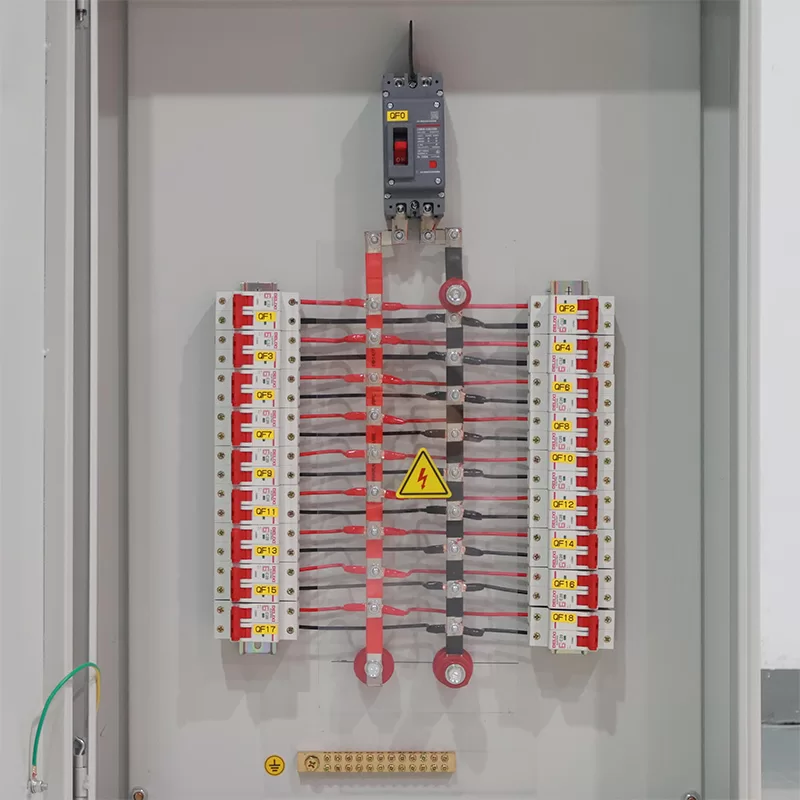
4. Space Constraints and Cable Management
A compact distribution panel must offer intelligent cable routing to prevent internal wire crowding. Poor cable management leads to restricted airflow and dangerous arc flash risks.
● Top vs. Bottom Entry: Removable gland plates must align with your building's primary cable trays.
● Internal Gutter Space: Sufficient bending radius space is critical for terminating heavy-gauge copper cables.
● Earth and Neutral Bars: Ensure solid brass or copper grounding bars are easily accessible for fast site wiring.
Customization vs. Standard Sub Distribution Boards
Standard off-the-shelf panels work well for simple retail shops with basic lighting needs. However, large commercial high-rises often demand fully engineered solutions.
● Smart Metering Integration: Custom panels can incorporate digital multi-function meters for precise tenant billing.
● Specific Breaker Brands: Customization allows you to specify preferred brands like ABB or Schneider to match existing site hardware.
● Tailored Dimensions: Engineered enclosures can be built to fit into uniquely narrow electrical closets.
Purchasing a fully assembled and factory-tested sub distribution board (SDB) dramatically reduces on-site labor costs. It completely eliminates the risk of missing components and wiring errors during installation.
Evaluating the Total Cost of Ownership (TCO)
Smart procurement teams look beyond the initial purchase price of a wall mounted switchgear. The operational expenses over a 20-year lifespan dictate the true cost of the equipment.
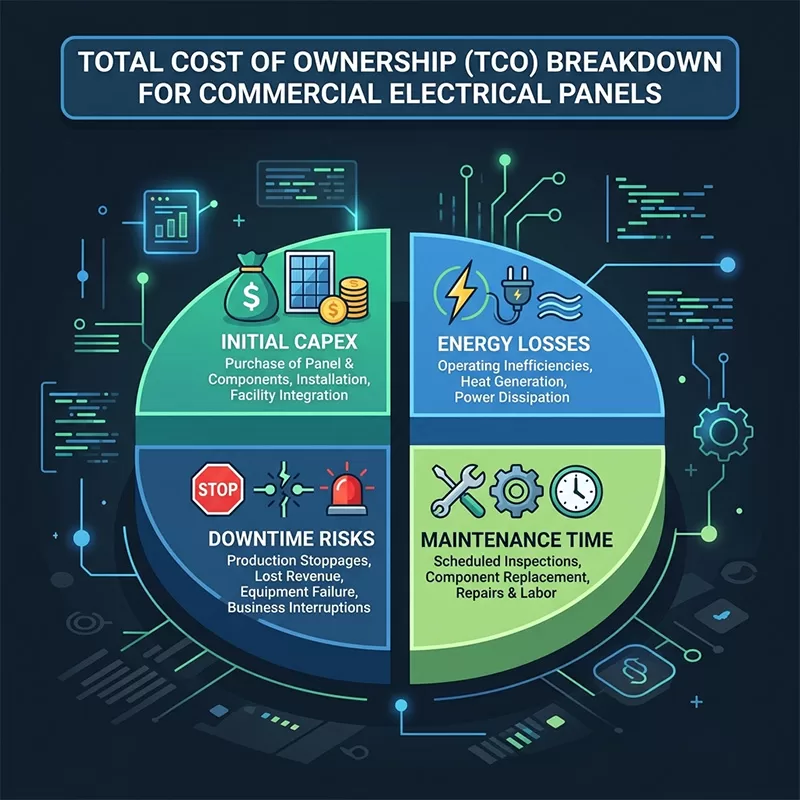
● Energy Efficiency: High-purity copper busbars significantly reduce energy loss through heat dissipation.
● Maintenance Accessibility: Front-facing, easily removable dead-front covers drastically cut down routine inspection time.
● Downtime Prevention: Premium internal components prevent nuisance tripping, ensuring zero disruption to commercial tenants.
Supplier Selection Criteria for Commercial Projects
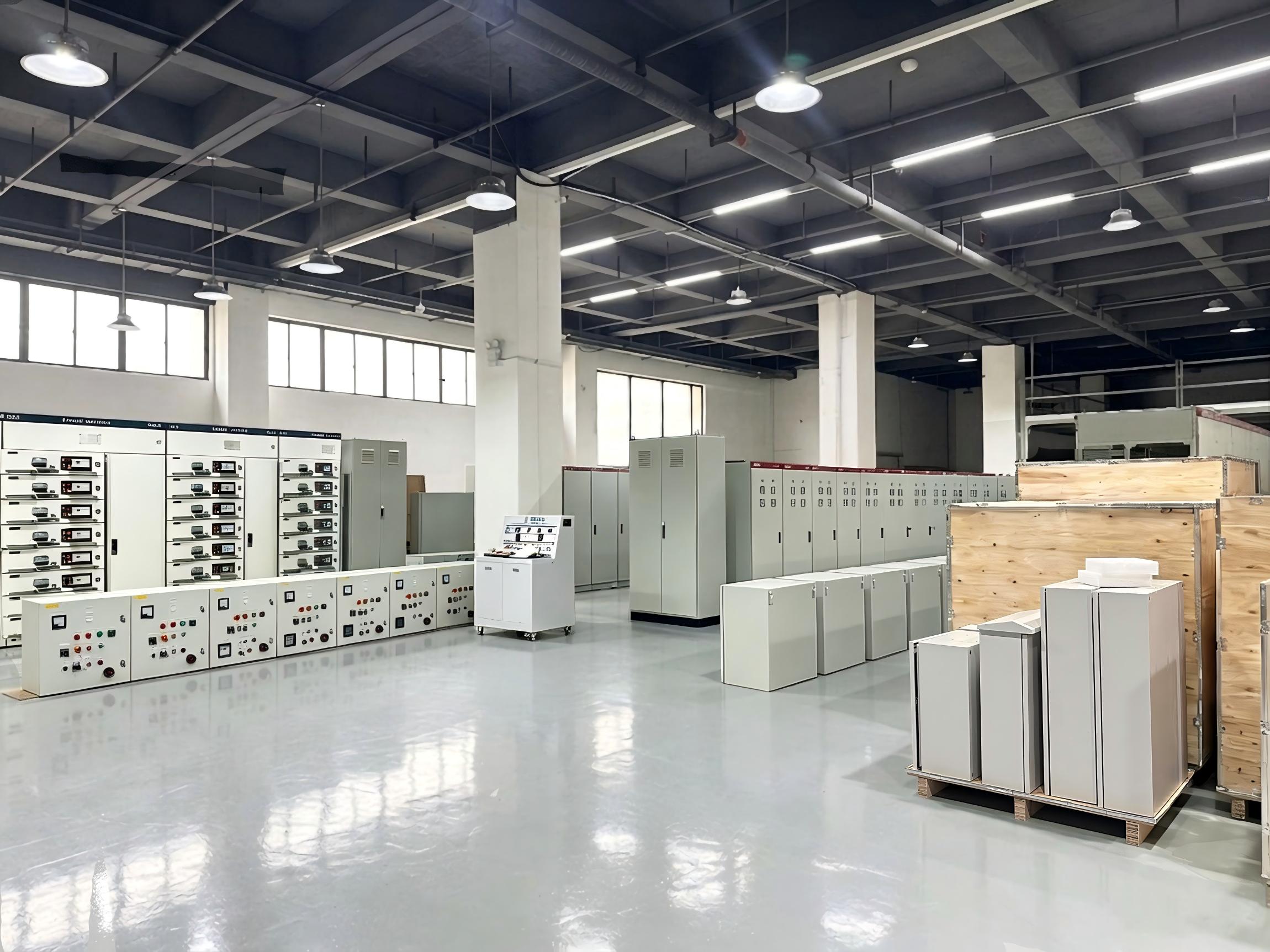
Your panel is only as reliable as the manufacturer behind it. Partnering with an experienced OEM factory guarantees project compliance and on-time delivery.
● Design & Engineering Support: The factory should provide detailed 2D/3D CAD drawings before manufacturing begins.
● Quality Control (FAT): The supplier must perform comprehensive Factory Acceptance Testing, including dielectric insulation tests.
● Logistics & Packaging: Export-grade wooden crating is essential to protect heavy panels during international shipping
Vendor Evaluation Checklist Matrix
| Evaluation Criterion | Minimum Requirement for Acceptance | Risk of Poor Vendor Selection |
| Engineering Drawing Speed | Provides CAD/SLD layouts within 48 hours. | Project delays due to mismatched dimensions. |
| Sheet Metal Thickness | Minimum 1.2mm to 1.5mm cold-rolled steel. | Panel warping or door sagging after installation. |
| Component Authenticity | Uses 100% genuine, certified circuit breakers. | Extreme fire hazards and inspection failures. |
| Surface Treatment | Electrostatic powder coating (min 70 microns). | Rusting and paint peeling in damp basements. |
FAQ
Q: Can I convert a surface mount panel into a flush mount?
Generally, no. Flush mount enclosures feature specialized overlapping door trims to cover drywall edges. You must specify the correct mounting type during the initial procurement phase.
Q: What is the standard height to mount a commercial electrical panel?
International building codes usually require the top breaker to be no higher than 1.9 meters (approx. 6 feet 7 inches) from the floor. This ensures safe and easy access during an emergency shutdown.
Q: Why do some wall panels need ventilation louvers?
High-amperage panels driving heavy HVAC loads generate significant internal heat. Ventilation louvers help dissipate this thermal energy, preventing breakers from prematurely tripping.
Q: Should I choose a metal or polycarbonate wall panel?
For commercial buildings, cold-rolled steel or galvanized steel is the industry standard for durability and fire safety. Polycarbonate is typically reserved for small, highly corrosive, or temporary outdoor applications.
Partner with XDEPE for Commercial Power Solutions
Securing the right electrical infrastructure is vital for any commercial building's safety and efficiency. At XDEPE, we engineer premium wall-mounted distribution panels tailored to your exact project space and specifications. Send us your Single-Line Diagram (SLD) today, and our expert technical team will provide a comprehensive, factory-direct quotation within 24 hours.




 Cabinet (1).webp "Automatic Transfer Switch (ATS) Failure: 5 Common Causes and How to Fix Them")
.webp "How to Select the Right 3 Phase Panel Board for Heavy Manufacturing Equipment")
 Switchgear (1).webp "What is a Withdrawable (Drawer-Type) Switchgear? A Complete Beginner's Guide")
.webp "Main Distribution Board vs. Sub Main Distribution Board: What's the Difference & How to Choose?")
