The Challenges Faced by the Food and Beverage Plant
Low Power Factor: The plant's massive deployment of inductive loads, like heavy-duty compressor motors, caused a severely low power factor, leading to unstable system voltages and triggering substantial reactive power penalty fines from the local utility grid.
High Line Losses: Continuous high-load operations without proper compensation resulted in excessive reactive currents circulating through the internal distribution network, drastically increasing thermal line losses and unnecessarily inflating daily electrical energy consumption and operational utility costs.
Inflexible Capacity: The factory’s existing legacy electrical infrastructure lacked modularity. As production lines expanded, the fixed-capacity panels could not adapt to surging reactive power demands, frequently causing dangerous equipment underperformance and threatening continuous beverage bottling operations.
Safety and Lifespan Risks: Frequent voltage drops and unstable power quality caused premature wear on sensitive automated production equipment. Without adequate short-circuit and thermal protection, the facility faced a significant risk of sudden electrical failures and costly manufacturing downtime.
Our Engineered Solutions
Intelligent Power Factor Correction: We integrated an advanced power factor controller within the main cabinet. It automatically calculates precise reactive demands and dynamically switches capacitor banks, instantly elevating the overall system power factor to a stable 0.95 or higher.
Optimized Energy Efficiency: By locally supplying reactive power through our specialized capacitor compensation cabinet, the system drastically reduces reactive current transmission. This eliminates excessive thermal line losses, significantly cuts monthly utility bills, and maximizes overall plant energy efficiency.
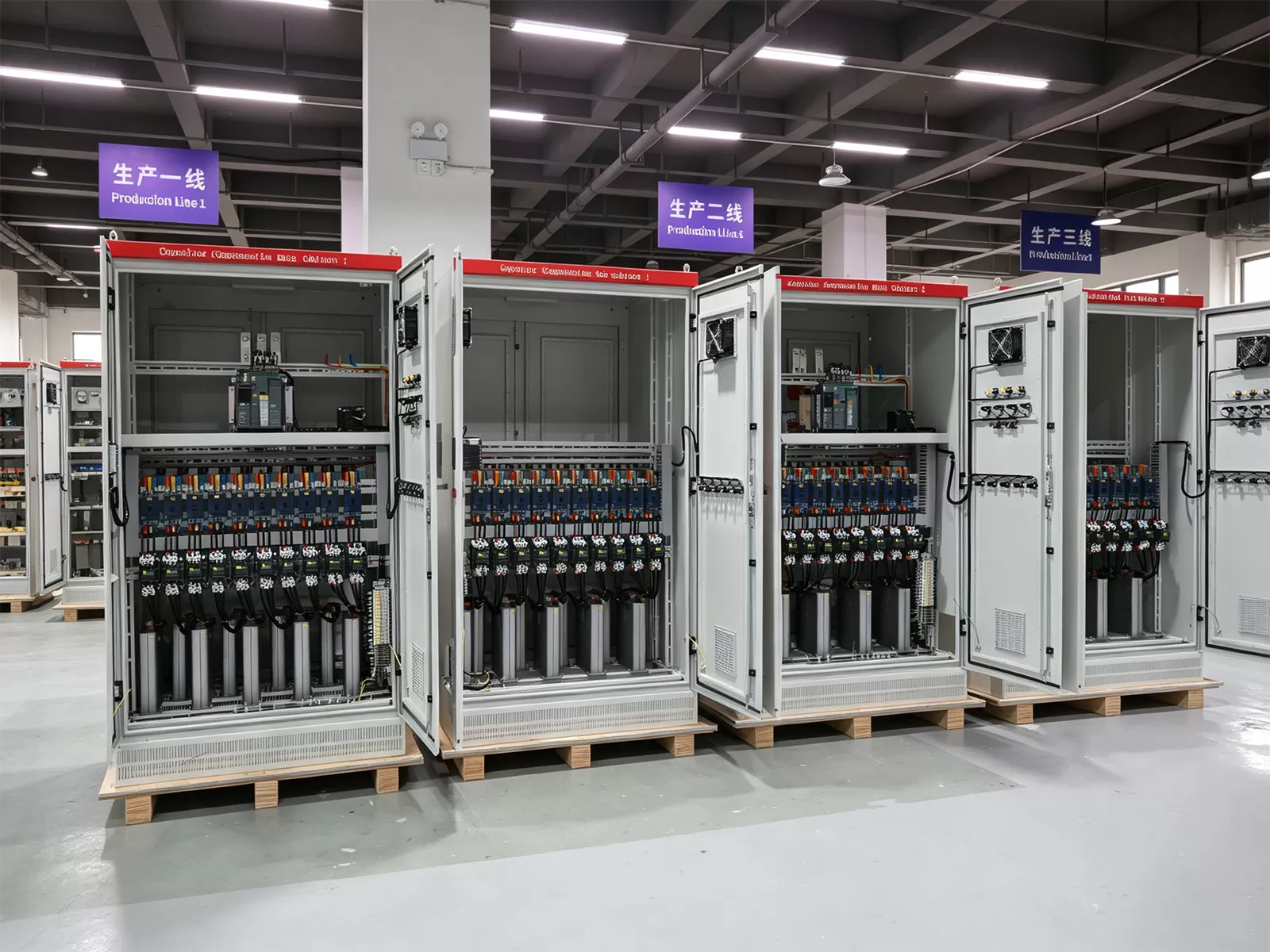
Modular Expansion Architecture: We deployed a flexible main and auxiliary cabinet configuration. This modular design perfectly accommodates future factory expansions, allowing seamless addition of compensation capacity without overhauling the primary electrical distribution infrastructure, ensuring long-term operational adaptability.
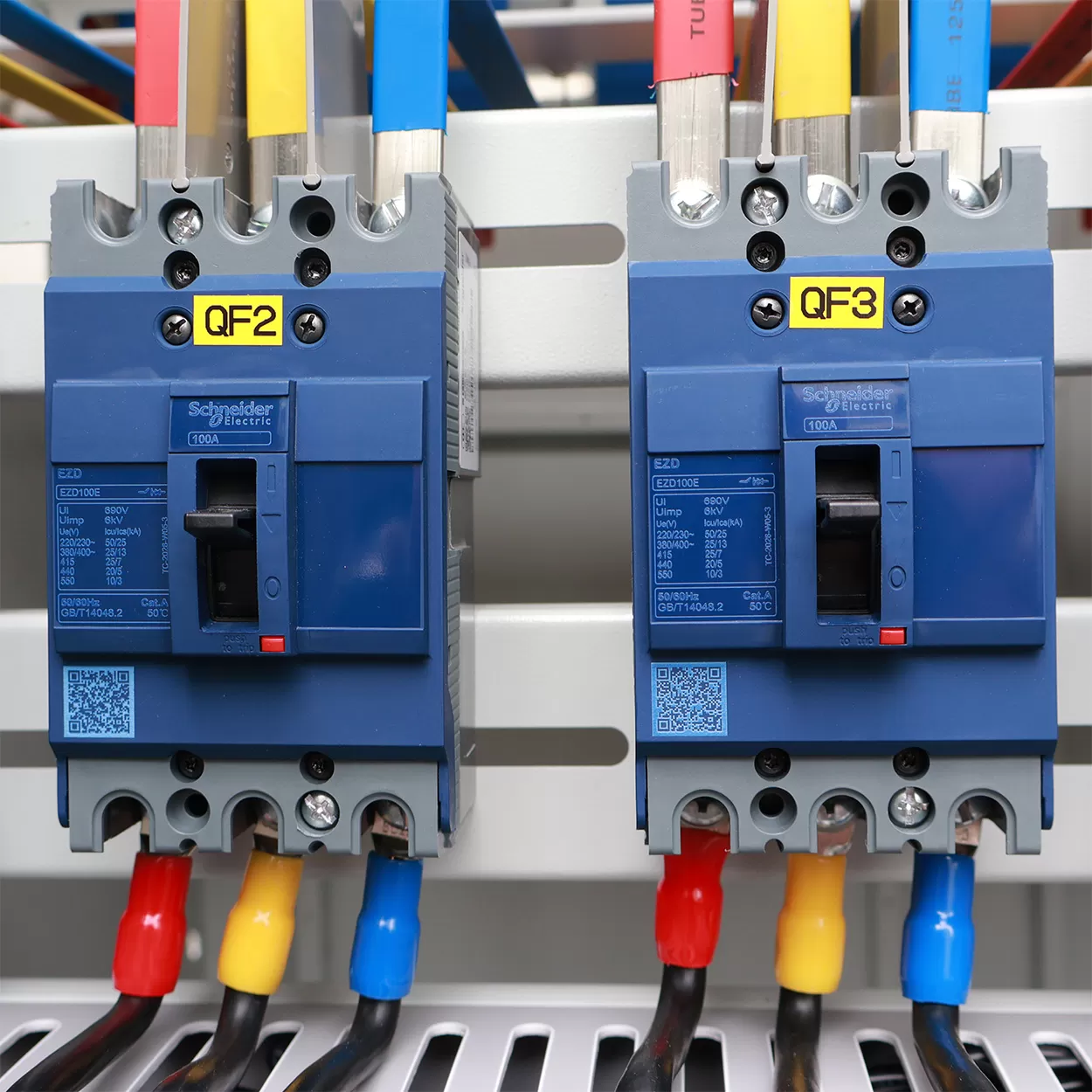
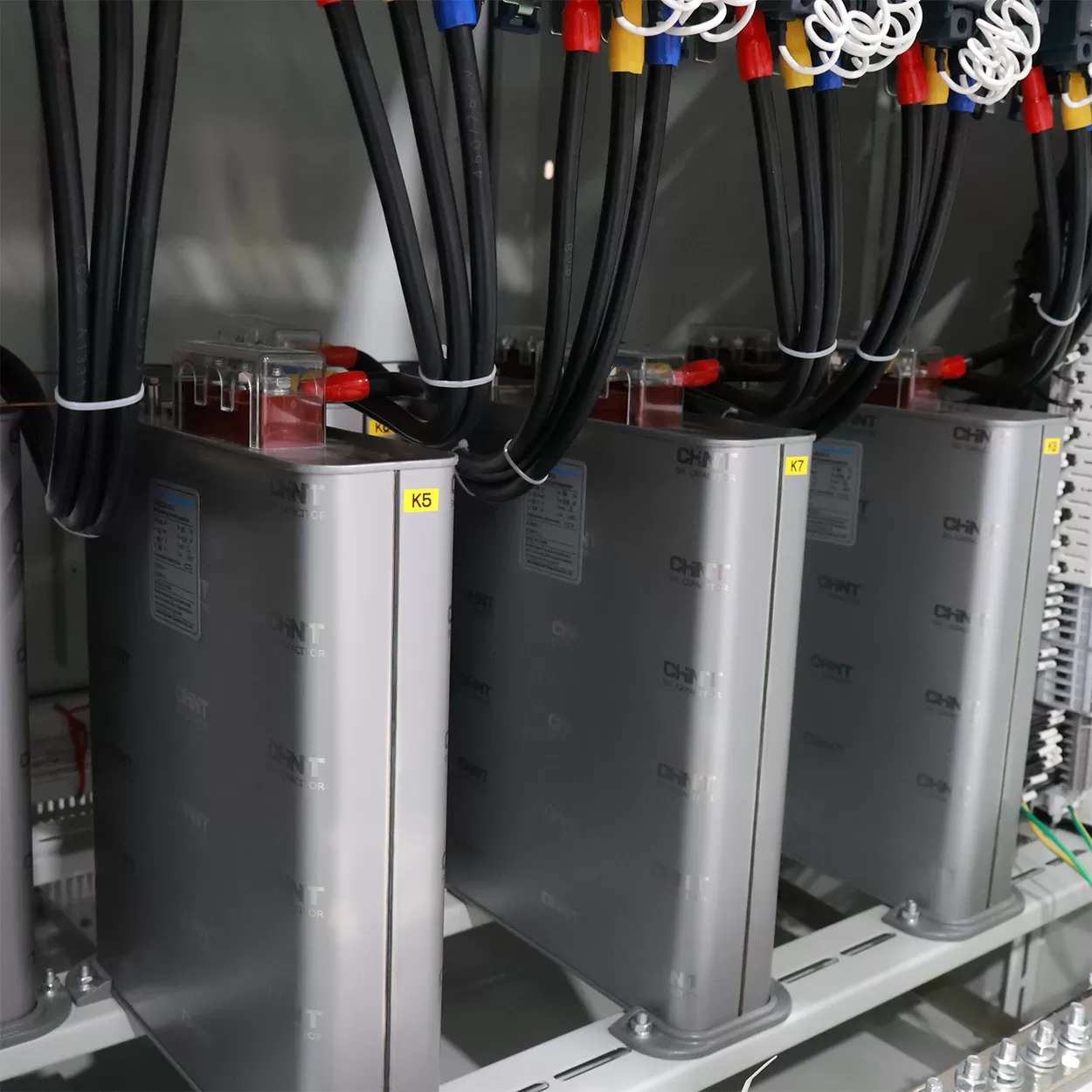
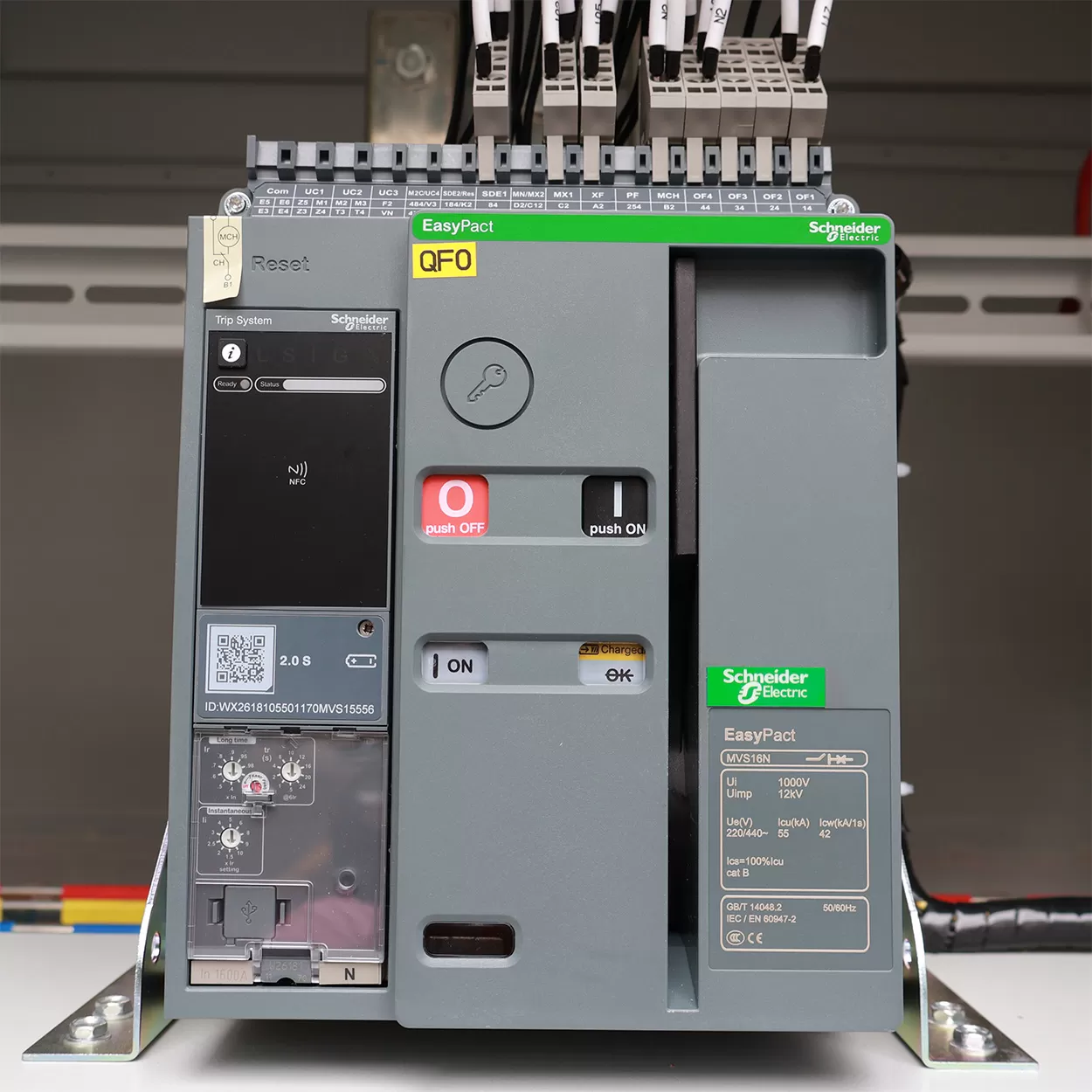
Comprehensive Safety Mechanisms: Our solution utilizes premium Schneider 1600A main circuit breakers and self-healing Chint capacitors. Coupled with robust thermal management and independent branch protection, it guarantees exceptional operational safety, completely eliminating catastrophic downtime risks for sensitive production lines.
Premium Hardware Configurations & Technical Details
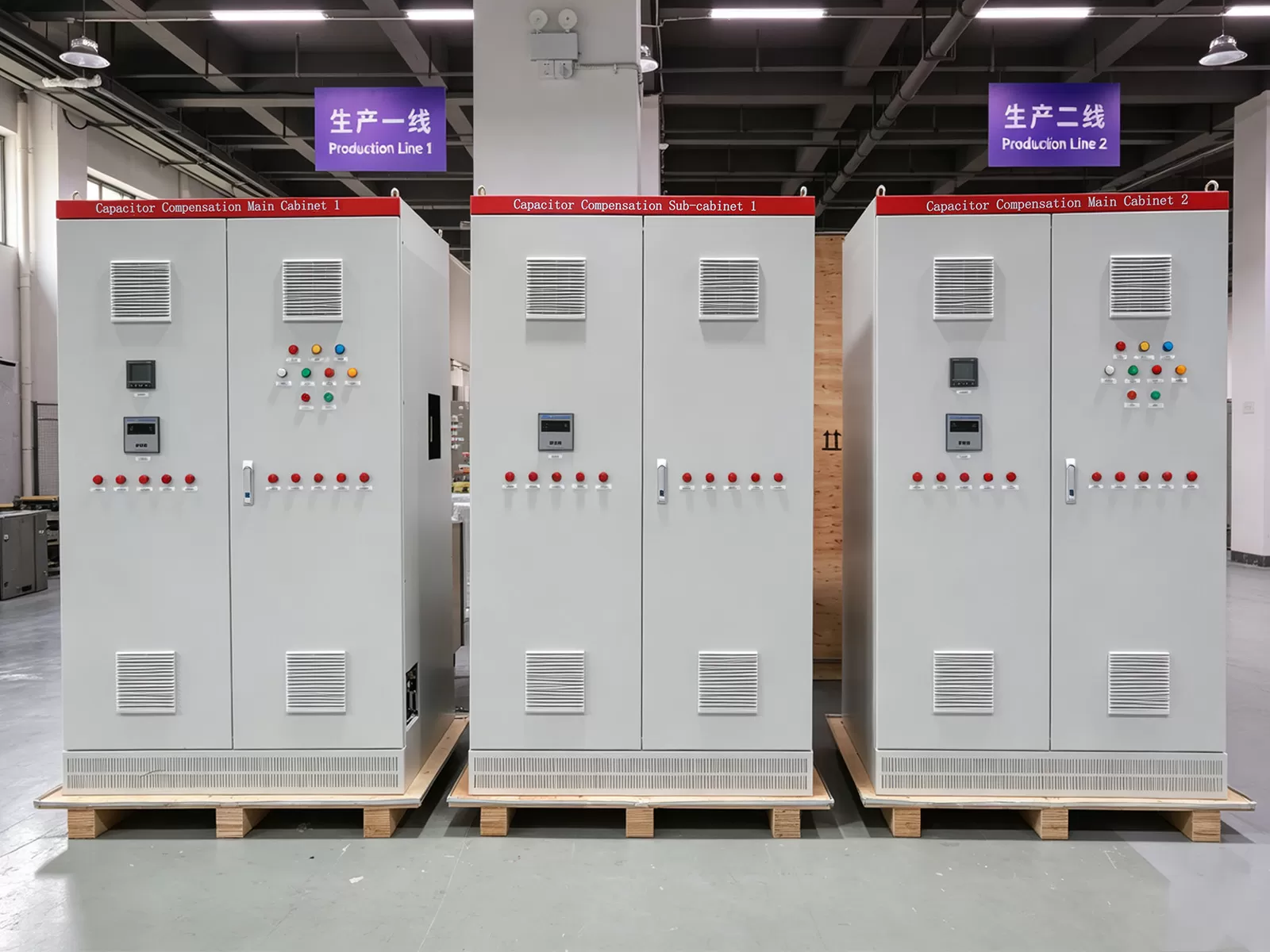
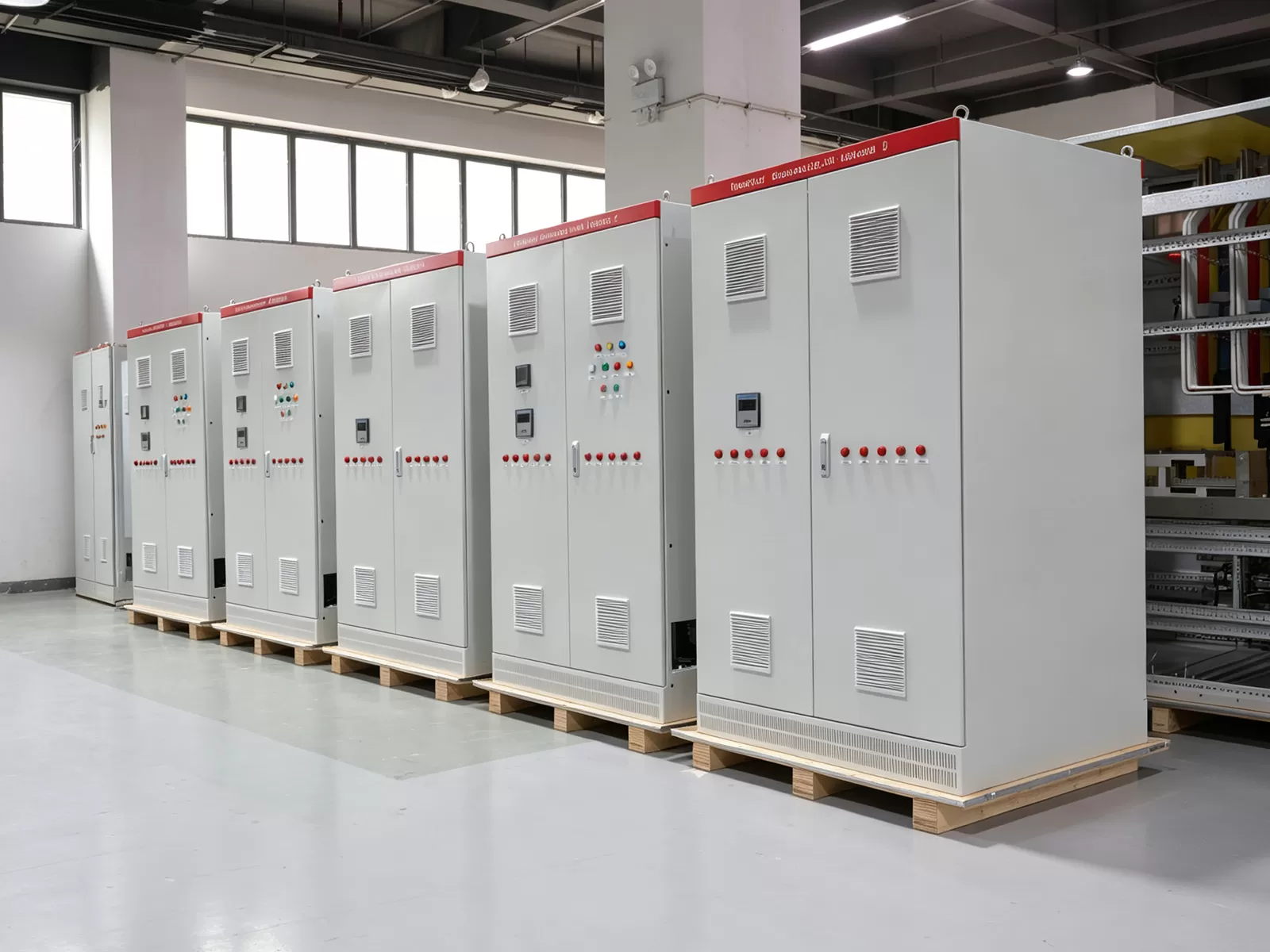
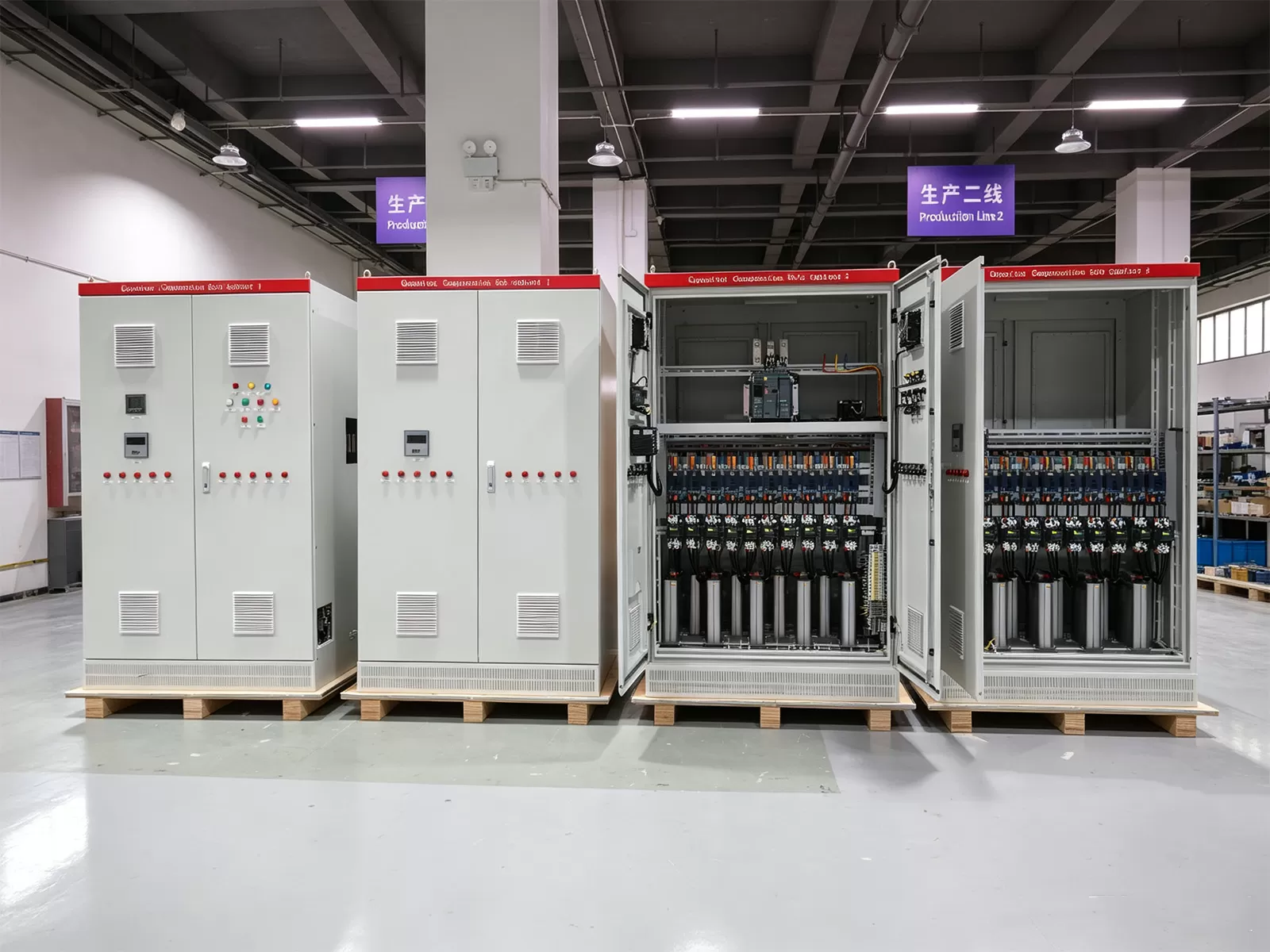
Robust Enclosure Design: Constructed with double-door metal housing featuring top lifting rings and bottom ventilation grilles. Integrated temperature control cooling devices guarantee long-term stable operation within harsh, high-temperature industrial manufacturing environments.
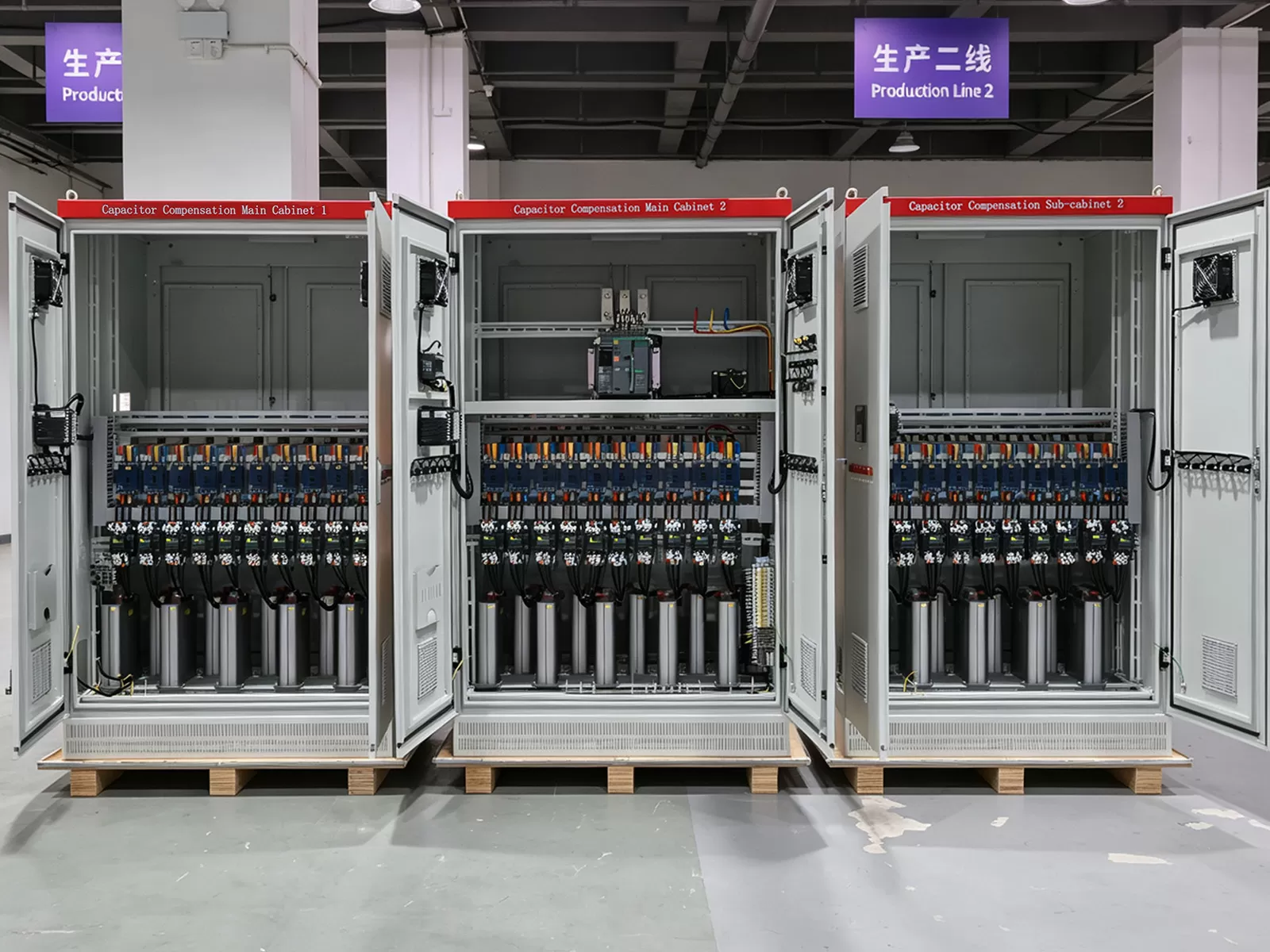
High-Capacity Main Circuit: The main cabinet is equipped with a Schneider EasyPact 1600A main circuit breaker. Paired with large-current insulated copper busbars, it delivers safe, low-impedance power convergence and exceptional short-circuit protection.
Intelligent Control Unit: Built-in power factor controllers and precision current transformers continuously monitor grid parameters. They automatically calculate reactive power demands, executing rapid, intelligent closed-loop switching commands to maintain optimal system stability.
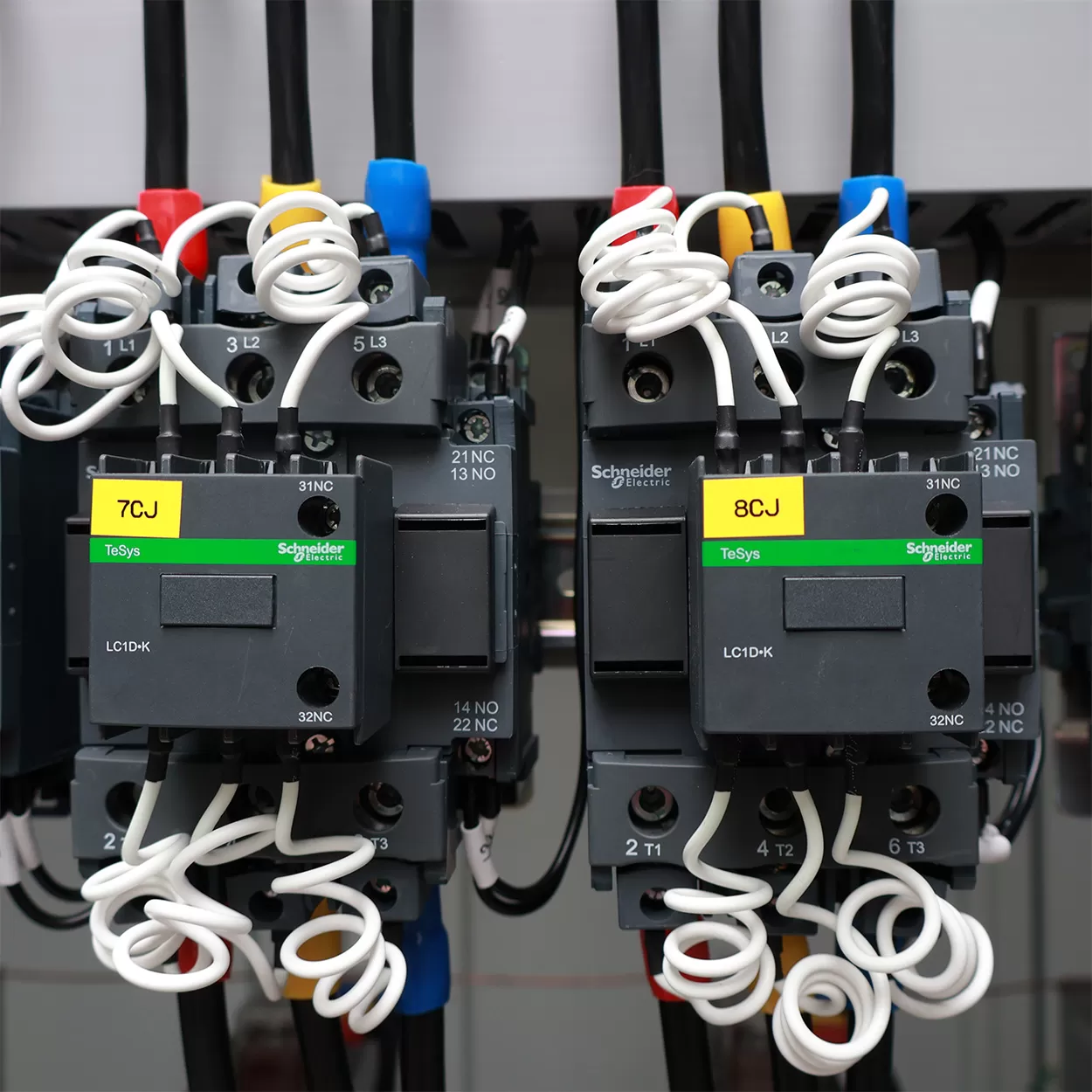
Premium Compensation Components: Branch circuits utilize dedicated capacitor contactors to suppress inrush currents. Coupled with Chint self-healing low-voltage shunt capacitors, the system ensures highly reliable, long-lasting reactive power output with independent branch protection.
Core Value Propositions & Customer Benefits
Eliminate Utility Penalties: By dynamically correcting the system power factor to above 0.95, the facility perfectly complies with stringent grid regulations, effectively eliminating costly reactive power fines and improving overall electrical compliance.
Release Transformer Capacity: The localized compensation significantly reduces the reactive load burden on primary distribution transformers. This effectively unlocks hidden capacity, allowing the plant to add new production machinery without expensive transformer upgrades.
Enhance Equipment Lifespan: Stabilizing system voltages and minimizing voltage drops drastically improves the power quality. This protects sensitive automated bottling equipment from electrical stress, reducing maintenance frequency and extending their operational lifespan.
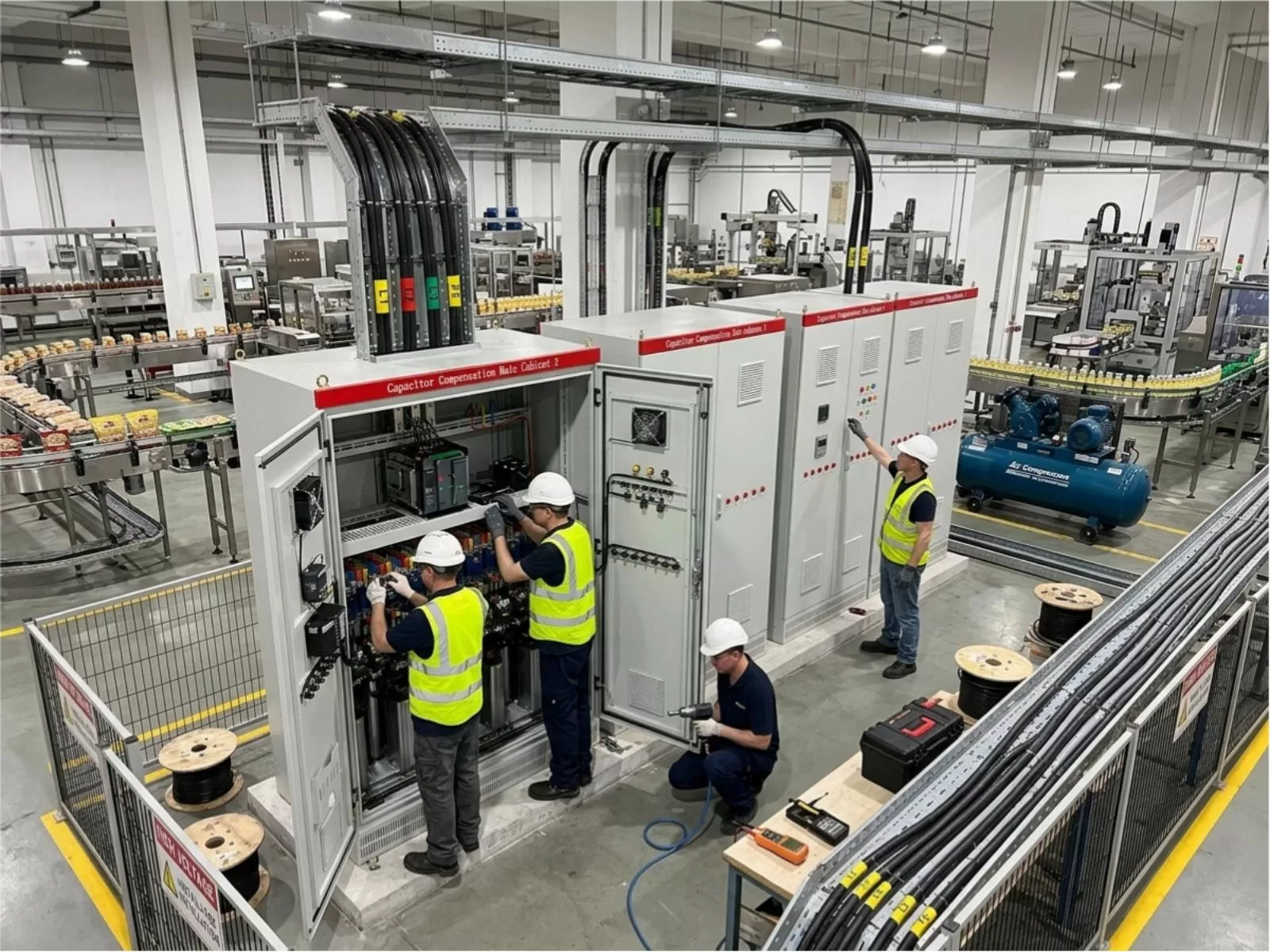
Highly Flexible Scalability: The modular linkage of one main and two auxiliary cabinets allows for on-demand capacity expansion. This plug-and-play adaptability ensures the compensation system grows seamlessly alongside the factory’s expanding production requirements.
Ideal Applications & Environments
Large-Scale Manufacturing Plants: Ideal for heavy-duty facilities like food processing and bottling plants. It stabilizes voltage across massive networks of inductive loads, ensuring uninterrupted operation of critical conveyor belts, compressors, and automated robotic packaging lines.
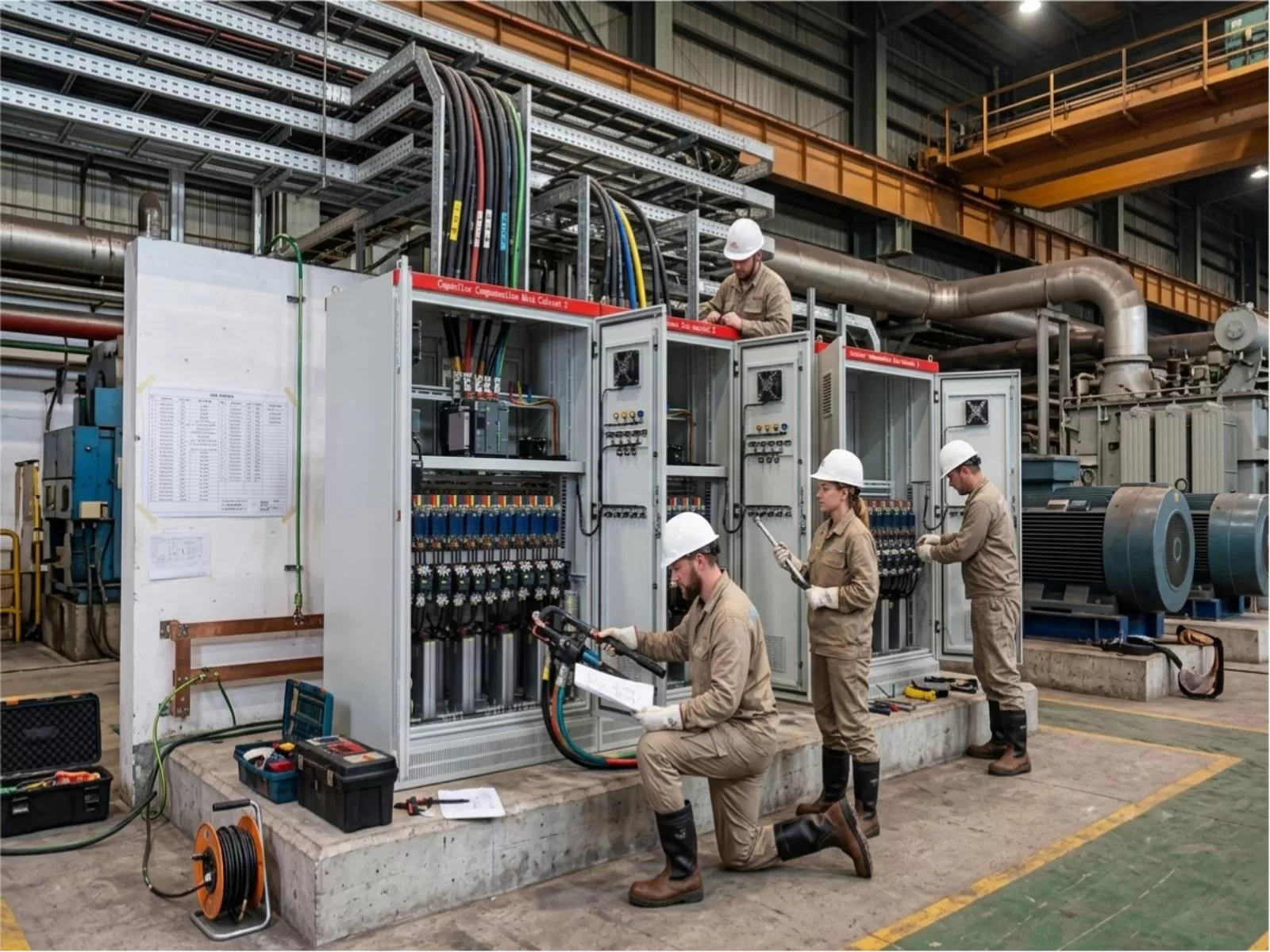
Heavy Industrial Parks: Perfectly suited for intensive industrial zones including metallurgy, mining, and chemical processing. The robust compensation cabinets easily handle extreme electrical loads, mitigating severe power fluctuations caused by heavy machinery and industrial motors.
Modern Commercial Complexes: An excellent choice for large shopping malls and commercial hubs with extensive HVAC systems and lighting networks. It dramatically reduces line losses, optimizing daily energy consumption and significantly lowering operational utility expenses.
High-Density Data Centers: Provides crucial power stability for massive server farms. By optimizing the power factor and reducing harmonic interference, it guarantees the clean, uninterrupted electrical supply absolutely necessary for sensitive, mission-critical IT infrastructure operations.