Introduction
Designing an automated smart industry or agriculture infrastructure requires a precise electrical distribution layout. Specifying an undersized wall-mounted unit or an overly bulky floor-standing enclosure leads to severe space constraints, thermal overloads, and costly downtime.
Engineering contractors and system integrators face high financial liabilities if their power enclosures fail to withstand harsh environmental elements. This comprehensive comparison guide breaks down the core structural and functional differences between floor-standing and wall-mounted distribution cabinets.
.webp?t=1793601642779 "Floor-Standing vs. Wall-Mounted Distribution Cabinets (1)")
What is a Floor-Standing Distribution Cabinet?
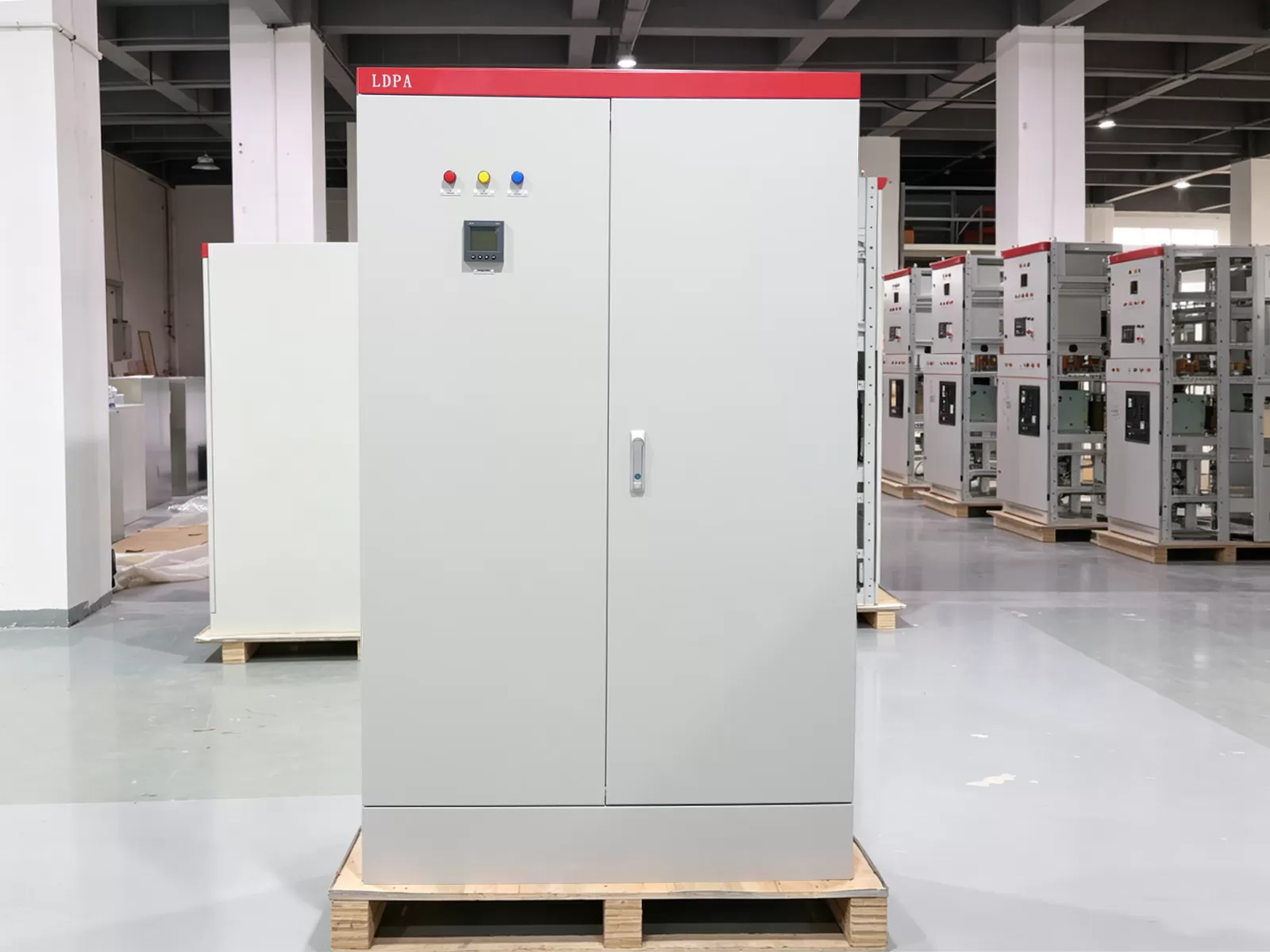
A floor-standing distribution cabinet is a heavy-duty, freestanding industrial enclosure engineered to manage high-capacity power distribution and complex automation control systems.
It anchors directly to concrete foundations, providing massive internal space for heavy-duty switchgear, PLCs, and large busbar networks. This equipment acts as the primary power hub for large-scale industrial facilities and smart agricultural processing centers.
○ Designed for high-amperage electrical loads and multi-bay component lineups.
○ Provides robust floor anchoring to support heavy internal equipment weight.
○ Offers exceptional internal clearance for complex cable routing and ventilation.
○ Delivers high modular expandability for future smart system upgrades.
.webp?t=1793601642779 "Floor-Standing vs. Wall-Mounted Distribution Cabinets (2)")
What is a Wall-Mounted Distribution Cabinet?
A wall-mounted distribution cabinet is a compact, space-saving electrical enclosure designed to be securely fastened onto vertical walls, columns, or agricultural shed structures.
It serves as an efficient zone sub-distribution panel for localized automation loops, lighting controls, and sensor networks. This enclosure provides reliable power protection without consuming valuable floor space.
○ Optimized for compact spaces and distributed zone power management.
○ Lightweight structural design allows straightforward wall or pole mounting.
○ Ideal for decentralized smart farming irrigation and greenhouse automation.
○ Protects internal control components against localized dust and moisture.
.webp?t=1793601642779 "Floor-Standing vs. Wall-Mounted Distribution Cabinets (3)")
Core Differences Between Floor-Standing and Wall-Mounted Cabinets
Understanding how these enclosure types diverge helps engineers match physical hardware directly to site constraints.
.webp?t=1793601642779 "Floor-Standing vs. Wall-Mounted Distribution Cabinets (4)")
1. Load Capacity and Internal Space
The total volume available to house electrical components, circuit breakers, and control hardware.
● Floor-Standing Distribution Cabinet: Massive internal volume capable of housing heavy-duty switchgear and multi-tier component racks.
● Wall-Mounted Distribution Cabinet: Compact internal volume strictly designed for light-to-moderate circuit breakers and compact controllers.
2. Installation Method and Structural Support
How the enclosure is physically supported within the industrial or agricultural environment.
● Floor-Standing Distribution Cabinet: Requires secure floor bolting or a dedicated concrete plinth foundation.
● Wall-Mounted Distribution Cabinet: Fastened directly to vertical structural walls using heavy-duty mounting brackets or unistrut channels.
3. Environmental Protection and IP Ratings
How effectively the enclosure seals out moisture, airborne dust, and corrosive agricultural chemicals.
● Floor-Standing Distribution Cabinet: Typically engineered with multi-fold welded frames achieving high IP54/IP55 ratings for heavy industrial plants.
● Wall-Mounted Distribution Cabinet: Features seamless gasketed doors achieving reliable outdoor protection (IP65/NEMA 4X) for exposed agricultural sites.
4. Maintenance Accessibility and Safety
The ease with which technicians can access internal wiring and perform routine inspections.
● Floor-Standing Distribution Cabinet: Offers full front and optional rear access doors for effortless large-scale maintenance.
● Wall-Mounted Distribution Cabinet: Restricted to front-access operation, requiring careful component layout to prevent congestion.
5. Total Cost of Ownership (TCO) and Scalability
The financial investment required versus future expansion flexibility.
● Floor-Standing Distribution Cabinet: Higher initial CAPEX offset by massive modular scalability for future plant expansions.
● Wall-Mounted Distribution Cabinet: Low initial procurement cost, but limited capacity for future system growth.
Technical Specification Comparison
The following technical matrix outlines the operational boundaries between floor-standing and wall-mounted enclosures.
Technical Capabilities Matrix
| Engineering Parameter | Floor-Standing Distribution Cabinet | Wall-Mounted Distribution Cabinet |
| Primary Application | Centralized industrial power & heavy automation | Decentralized zone sub-distribution & sensors |
| Enclosure Weight Capacity | High (Supports heavy components & busbars) | Moderate (Limited by wall fastening strength) |
| Typical Ingress Protection | IP54 / IP55 standard industrial sealing | IP65 / NEMA 4X weatherproof agricultural sealing |
| Cable Entry Options | Bottom gland plates and top/bottom removable panels | Flexible bottom or side knockouts/cable glands |
| Modular Scalability | Excellent (Multi-bay side-by-side coupling) | Limited (Single standalone enclosure unit) |
How to Choose the Right Solution?
.webp?t=1793601642779 "Floor-Standing vs. Wall-Mounted Distribution Cabinets (5)")
Selecting the correct enclosure depends entirely on your facility's spatial layout and electrical power density.
Scenario 1: Large-Scale Smart Industrial Manufacturing Plants
Heavy manufacturing lines demand massive power distribution and advanced PLC automation integration.
○ Floor-Standing Distribution Cabinet: Mandatory to house heavy-duty low voltage distribution cabinet assemblies and main busbars.
○ Provides ample clearance for complex wiring and high-density heat dissipation.
○ Ensures maximum physical security for central plant automation servers.
Scenario 2: Smart Agriculture Greenhouses & Irrigation Hubs
Agricultural sites require distributed control boxes exposed to high humidity, dust, and washdown environments.
○ Wall-Mounted Distribution Cabinet: Ideal for mounting on greenhouse columns or outdoor pump station walls.
○ Keeps sensitive irrigation controllers elevated away from floor moisture and debris.
○ Provides a reliable power distribution box solution for remote sensor loops.
Scenario 3: The Hybrid Industrial Approach
Modern smart facilities frequently combine both enclosure types to optimize electrical architecture.
○ Deploy central floor-standing distribution cabinets in the main electrical control room.
○ Distribute power outward to localized electrical power distribution boards mounted on walls across remote facility zones.
Project Application Matrix
Match your specific project profile against this engineering application matrix to finalize your enclosure selection.
Project Application Matrix
| Facility Type / Industry | Recommended Solution | Primary Engineering Rationale |
| Automated Smart Factories | Floor-Standing Distribution Cabinets | Centralizes heavy automation gear and multi-bay PLC controllers safely. |
| Hydroponic Greenhouse Networks | Wall-Mounted Distribution Cabinets | Space-saving design protects irrigation controllers from high moisture. |
| Municipal Wastewater Plants | Floor-Standing Enclosures (316L) | Withstands harsh chemical environments while managing heavy pump starters. |
| Solar Farm Monitoring Stations | Wall-Mounted Enclosures (IP65) | Easily mounts to outdoor inverter skids for secure solar data logging. |
FAQ
Q: Can a wall-mounted cabinet handle heavy industrial switchgear components?
No. Wall-mounted cabinets have strict weight limitations determined by structural wall strength. Heavy switchgear and thick copper busbars require a floor-standing enclosure.
Q: What is the main difference between floor-standing and wall-mounted cabinets?
Floor-standing cabinets anchor to the ground and handle high-capacity, centralized power distribution. Wall-mounted cabinets attach to vertical surfaces for compact, localized zone control.
Q: Are wall-mounted cabinets suitable for outdoor agricultural environments?
Yes, provided you specify an IP65 or NEMA 4X rated enclosure with UV-resistant powder coating to protect internal electronics against rain, dust, and direct sunlight.
Q: Can floor-standing cabinets be expanded in the future?
Yes. Most industrial floor-standing enclosures feature modular designs that allow side-by-side bay coupling, enabling seamless expansion as your smart facility grows.
Partner with XDEPE for Mission-Critical Power Solutions
Specifying the correct low-voltage switchgear architecture is vital for maintaining continuous, uninterrupted data center operations. At XDEPE, we engineer and manufacture custom-built low voltage distribution switchboards, Form 4 panels, and drawout switchgear assemblies tailored to your exact project parameters. Send your Single-Line Diagram (SLD) and load requirements to our engineering team today to receive a comprehensive, factory-direct quotation within 24 hours.




.webp "Floor Standing vs. Wall Mounted Distribution Cabinets for Smart Agriculture & Industry")
.webp "Specifying Low Voltage Switchgear for Data Centers: A Step-by-Step Guide")
 Cabinet (1).webp "Automatic Transfer Switch (ATS) Failure: 5 Common Causes and How to Fix Them")
.webp "How to Select the Right 3 Phase Panel Board for Heavy Manufacturing Equipment")
 Switchgear (1).webp "What is a Withdrawable (Drawer-Type) Switchgear? A Complete Beginner's Guide")