
Introduction
A reliable electrical network starts with a properly engineered power distribution cabinet. However, mixing up the roles of incoming and outgoing units is a costly and dangerous mistake.
Sizing these panels incorrectly can cause severe thermal overloads, equipment damage, and plant-wide blackouts. Understanding their specific functions is critical for any new facility build.
This switchgear configuration guide breaks down exactly how they differ, how they connect, and how to specify them correctly for your next project.
.webp?t=1788157864178 "Incoming vs. Outgoing Feeder Cabinets(7)")
What is a Main Incoming Feeder Cabinet?
The main incoming feeder cabinet is the primary gateway for electricity entering your facility. It connects directly to the downstream side of the main utility transformer.
Its primary job is to safely receive massive amounts of raw, high-amperage power and prepare it for the rest of the switchgear lineup.
○ It handles the absolute highest total current load of the entire facility network.
○ It is equipped with comprehensive utility metering and advanced power quality monitors.
○ It provides heavy-duty protection against massive short-circuit faults from the grid.
○ It acts as the master isolation point for conducting total facility maintenance shutdowns.
What is an Outgoing Distribution Panel?
An outgoing distribution panel sits directly adjacent to, or downstream from, the main incoming unit. It takes the massive bulk power and divides it into smaller, manageable branch circuits.
These cabinets act as the localized distribution hubs that feed power to individual machines, motor control centers, or secondary sub-panels.
.webp?t=1784778325333 "Incoming vs. Outgoing Feeder Cabinets (2)")
○ It contains multiple smaller circuit breakers rather than one single massive breaker.
○ It connects directly to the main electrical busbar system to safely share the power load.
○ It allows for targeted power isolation, letting you shut down one machine without affecting the plant.
○ It is highly customizable based on the exact quantity and size of the loads on the factory floor.
Core Differences Between Incoming and Outgoing Cabinets
While they often look identical from the outside to maintain a clean aesthetic, their internal engineering is vastly different. Here is a breakdown of their technical distinctions.
1. Current Capacity and Load Handling
● Incoming Cabinet: Designed to handle the total sum of all facility currents, often exceeding 4000A.
● Outgoing Cabinet: Handles divided, smaller loads, typically ranging from 16A up to 1250A per individual circuit.
2. Core Circuit Breaker Types
● Incoming Cabinet: Utilizes a massive, heavy-duty air circuit breaker (ACB) for primary switching and high fault clearing.
● Outgoing Cabinet: Relies on an array of compact molded case circuit breaker (MCCB) units for targeted branch protection.
.webp?t=1784778325333 "Incoming vs. Outgoing Feeder Cabinets (3)")
3. Busbar Configuration
● Incoming Cabinet: Features extremely thick, double-layered horizontal copper busbars to survive intense thermal stress.
● Outgoing Cabinet: Uses specialized vertical busbars configured specifically for high-density breaker mounting.
4. Metering and Intelligence
● Incoming Cabinet: Contains complex multi-function meters, surge arresters, and utility-grade current transformers.
● Outgoing Cabinet: Usually features simple ammeters or basic trip-indicator lights for local monitoring.
5. Maintenance and Downtime Impact
● Incoming Cabinet: Tripping this cabinet results in a total blackout for the entire connected low voltage switchgear lineup.
● Outgoing Cabinet: Tripping a single outgoing breaker only isolates one specific machine or zone, keeping the rest of the plant running.
Technical Specification Comparison
Comparing these critical parameters side-by-side reveals the stark contrast in their engineering and safety requirements.
Technical Capabilities Matrix
| Technical Specification | Main Incoming Feeder Cabinet | Outgoing Distribution Panel |
| Typical Rated Current (In) | 1000A up to 6300A | 16A up to 1250A (Per Circuit) |
| Primary Switching Device | Draw-out Air Circuit Breaker (ACB) | Fixed or Plug-in MCCBs |
| Short-Circuit Withstand (Icw) | Extremely High (65kA - 100kA) | Moderate to High (25kA - 65kA) |
| Physical Footprint | Large (Requires wide cabinet for ACB) | Flexible (Multiple MCCBs stacked vertically) |
.webp?t=1784778325333 "Incoming vs. Outgoing Feeder Cabinets (4)")
How to Choose the Right Solution?
Configuring these cabinets requires analyzing your facility's peak power load, safety requirements, and future expansion plans.
Scenario 1: Heavy Industrial Manufacturing
Large factories require massive power reserves and high short-circuit withstand capabilities to operate safely.
○ Specify an oversized incoming cabinet to handle the heavy inrush currents of large motor startups.
○ Use withdrawable MCCBs in the outgoing cabinet to allow for rapid, safe replacements without plant shutdowns.
○ Ensure the entire copper busbar system is braced heavily for maximum fault levels.
Scenario 2: Commercial Office Buildings
Commercial facilities prioritize space-saving designs, lower peak amperage, and quiet operation.
○ Select a compact incoming cabinet to fit within tight basement electrical rooms.
○ Use fixed-type breakers in the outgoing panels to reduce the overall equipment footprint and cost.
○ Focus on basic energy metering rather than complex, expensive power quality analysis tools.
Scenario 3: The Hybrid Approach
Large sprawling campuses often use a combination of primary and secondary distribution points to save on copper cabling.
○ Deploy one central main incoming cabinet directly at the utility grid drop point.
○ Route high-amperage power to multiple sub-outgoing cabinets located in different buildings.
○ This strategy drastically reduces expensive heavy cable runs and localizes fault isolation.
Project Application Matrix
| Facility Type | Configuration Focus | Key Engineering Reason |
| Heavy Factory | 100kA Incoming + Withdrawable Outgoing | Maximizes uptime; allows fast replacement of damaged branch breakers. |
| Data Center | Dual Incoming (Main-Tie-Main) | Ensures total redundancy; if one grid fails, the other takes the full load. |
| Commercial Plaza | Compact Incoming + High-Density Outgoing | Saves valuable real estate space while feeding hundreds of small tenant loads. |
.webp?t=1784778325333 "Incoming vs. Outgoing Feeder Cabinets (5)")
FAQ
Q1: Can I use an MCCB in an incoming cabinet?
Yes, but only for smaller facilities where the total incoming load is under 1250A. For large industrial plants, a heavy-duty ACB is strictly required for thermal stability and high fault clearing.
Q2: Do incoming and outgoing cabinets share the same busbar?
Yes, in a seamlessly integrated switchgear lineup, the main horizontal copper busbars run continuously through both the incoming and outgoing cabinets to distribute power evenly.
Q3: Why are outgoing cabinets taller and narrower?
Outgoing cabinets are designed for spatial efficiency. Their narrow design allows engineers to stack multiple small breakers vertically, maximizing the number of circuits in a small footprint.
.webp?t=1784778325333 "Incoming vs. Outgoing Feeder Cabinets(6)")
Secure Your Plant with Fully Integrated Switchgear
Piecing together mismatched panels on-site leads to dangerous busbar misalignment and costly installation delays.
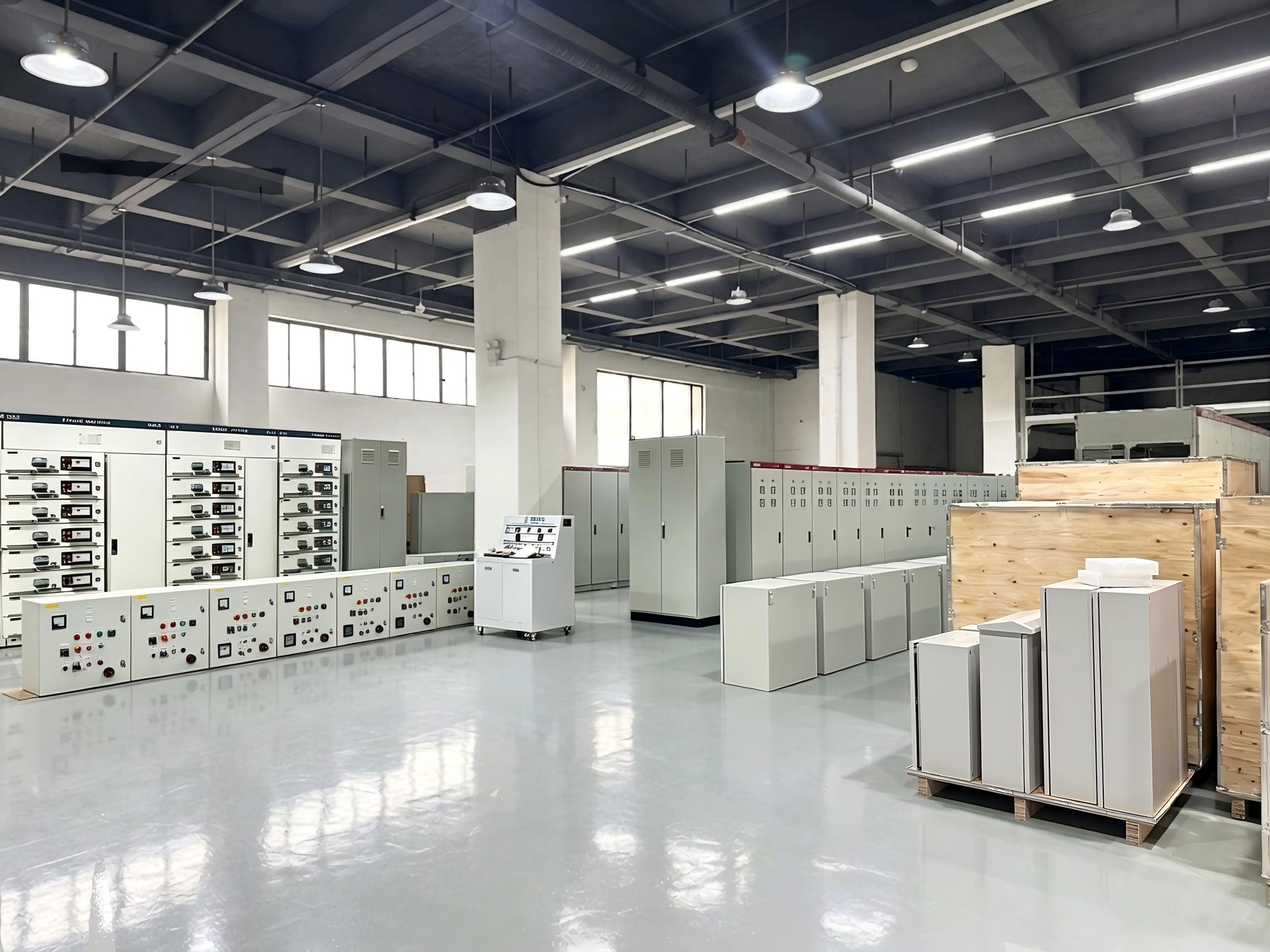
As a premier factory specializing in heavy-duty, floor-standing distribution systems, we deliver fully assembled and factory-tested incoming and outgoing cabinet lineups. Send our engineering team your Single Line Diagram (SLD) today for a customized, perfectly integrated technical proposal.





.webp?t=1787649054185 "22-Day Delivery: 50kW Sync Panels to Philippines")
.webp?t=1787648147488 "Xdepe 100% FAT Protocol Ensures Zero-Defect Electrical Cabinets")
.webp?t=1787647313485 "Top 10 Power Distribution Cabinet Manufacturers")
.webp?t=1787642349973 "Xdepe HV & LV Electrical Cabinets Achieve Full CE Certification")
.webp?t=1787641839853 "Top 10 Floor-Standing Electrical Cabinet Manufacturers")